How Do AI Detectors Actually Work? A Plain-English Guide
Wondering how AI detectors spot machine-written text? This plain-English guide explains perplexity, burstiness, and pattern analysis — no jargon, no hype.
How Do AI Detectors Actually Work? A Plain-English Guide
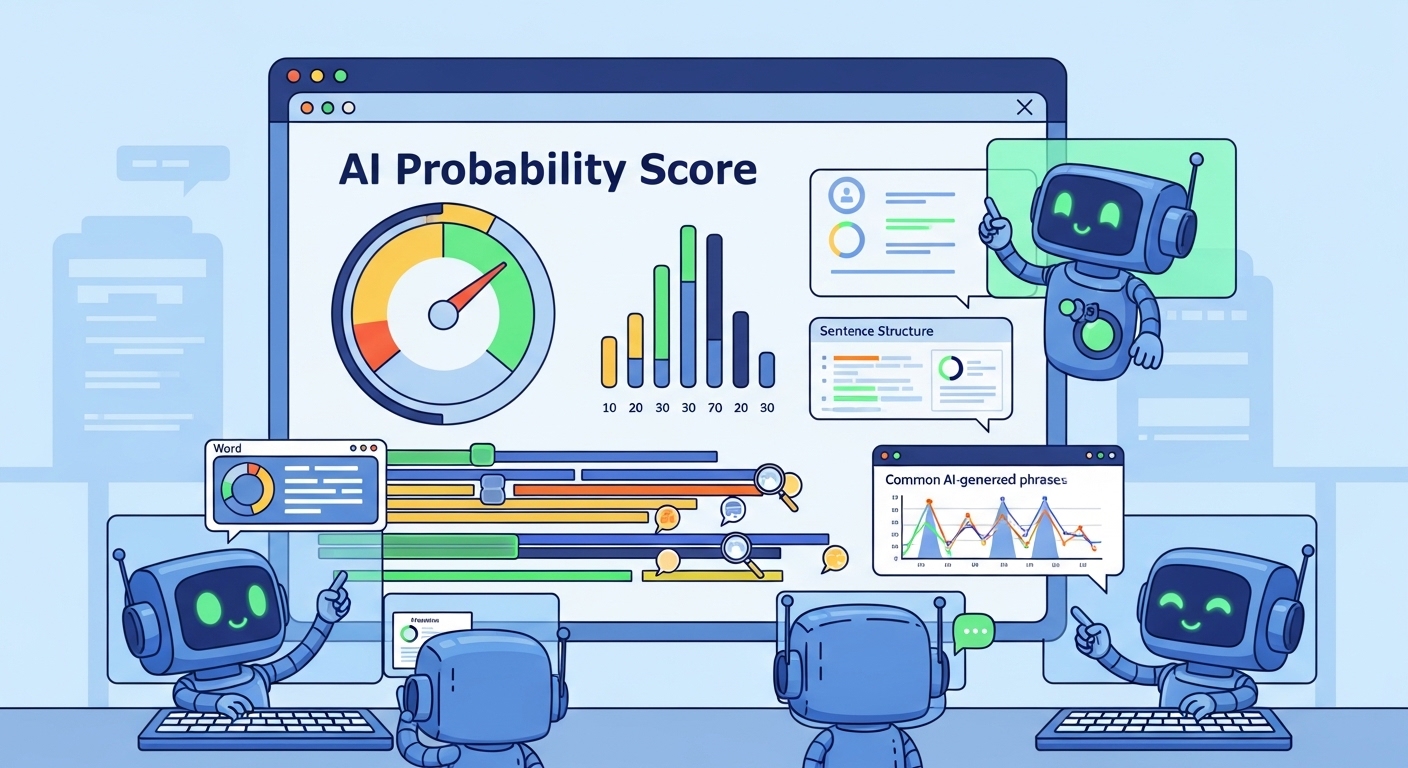
You've probably seen the score by now — some percentage claiming your text is "87% likely AI-generated." Maybe it confirmed a suspicion. Maybe it accused your own writing and left you staring at the screen, offended.
Either way, a fair question follows: how does the thing actually know?
Most explanations of AI detectors drown you in machine-learning jargon. Let's skip that. Here's what's really happening under the hood, in plain language.
The short version
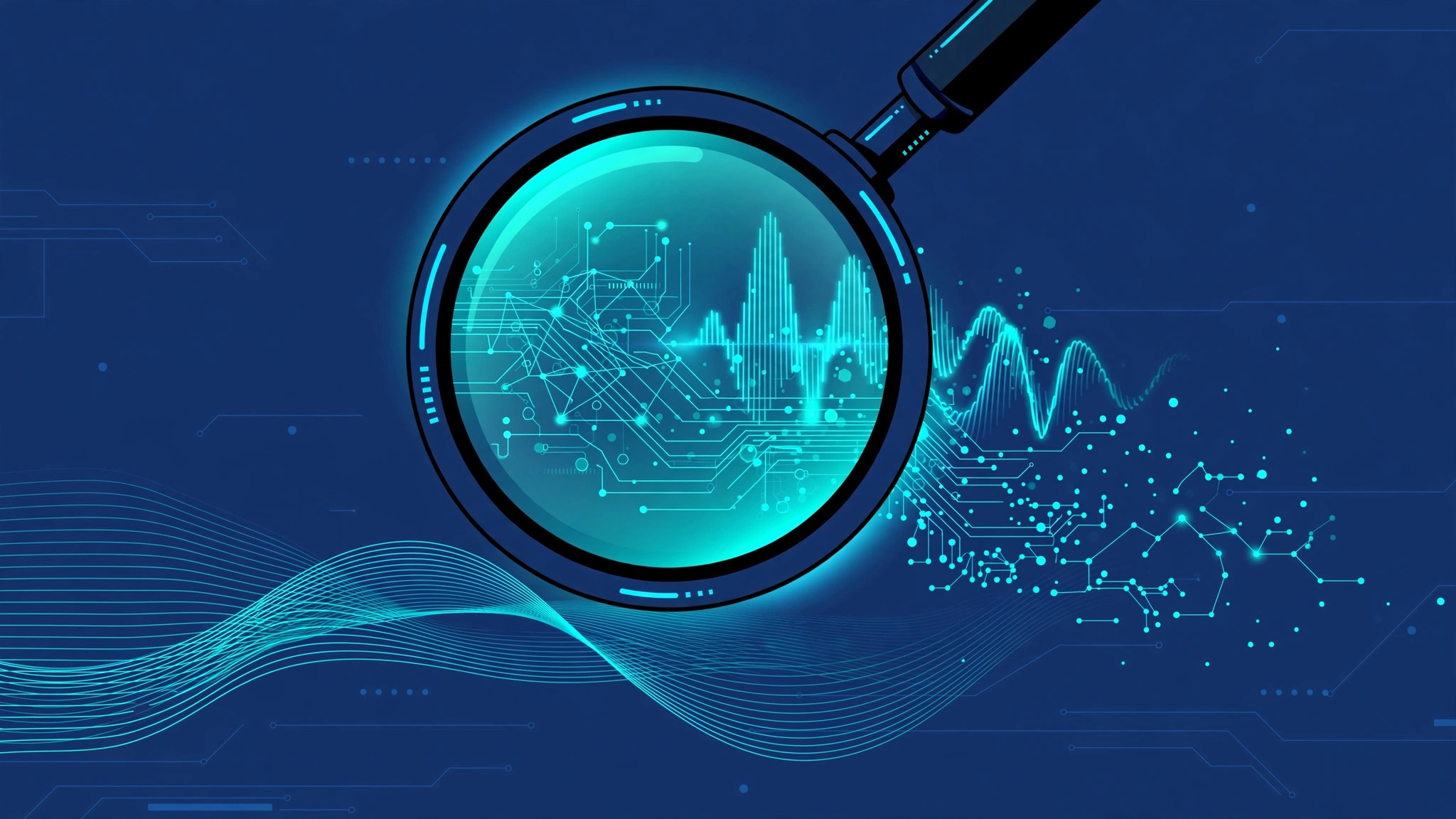
An AI detector doesn't read your text the way a teacher does. It doesn't understand your argument or check your facts. Instead, it measures how predictable your writing is — and compares that predictability against the fingerprints that language models tend to leave behind.
That's it. That's the whole trick. Everything else is detail.
Why predictability matters
Here's the thing about how AI writing tools generate text: they work by predicting the next most likely word, over and over, millions of times. Because they're optimized to pick plausible, safe, statistically common choices, their output ends up… smooth. Very smooth. Almost too smooth.
Human writing is messier. We start sentences with "And" and "But." We write a long winding sentence, then a short one. We use a weird word because we like how it sounds. We contradict ourselves, circle back, go on tangents.
Detectors exploit exactly this difference.
The two signals detectors actually measure
1. Perplexity — "How surprising is this text?"
Perplexity is the fanciest word in this whole article, and it just means surprise.
Imagine a model reading your sentence and guessing each word before it sees it. If it guesses right most of the time, the text has low perplexity — it's predictable. AI-generated text usually scores low on perplexity, because it was literally created by a machine picking the most predictable words.
Human writing tends to have higher perplexity: unexpected word choices, unusual turns of phrase, personal details a model wouldn't naturally produce.
Think of it like this: if someone always orders the most popular dish at every restaurant, you start to suspect they're following a guidebook. That's low perplexity.
2. Burstiness — "How much does the rhythm vary?"
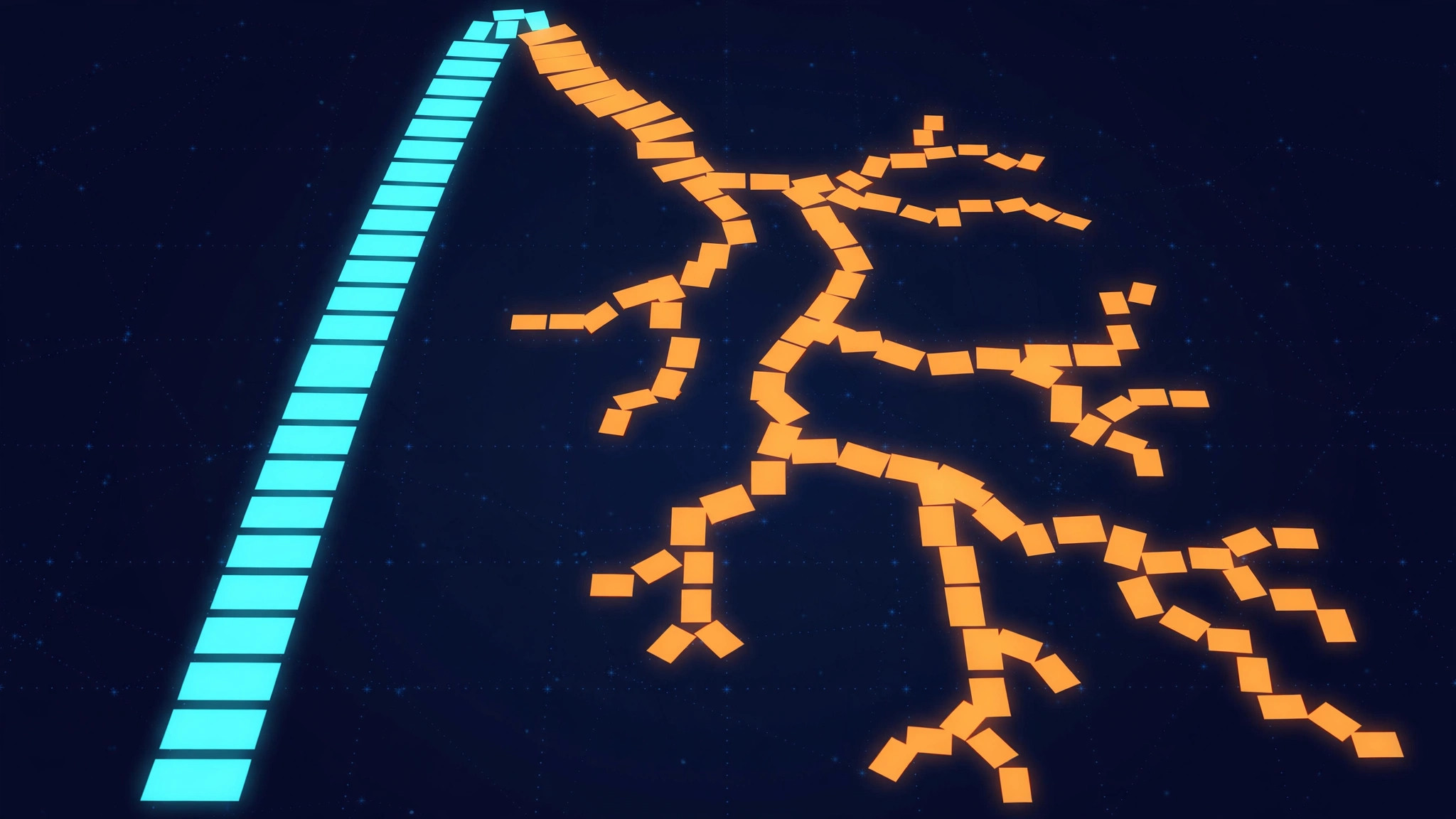
Humans write in bursts. A punchy two-word sentence. Then a long one that keeps going because there's a lot to say and the thought hasn't finished and honestly it could use an editor. Then another short one.
AI writing, left to its own devices, tends toward uniform rhythm — sentences of similar length, similar structure, paragraph after paragraph. It's not a rule, but it's a strong tendency, and detectors measure it.
Together, perplexity and burstiness form the core "writing fingerprint" that most detectors analyze.
What else detectors look at
Modern detectors layer in a few more signals:
- Sentence structure variety — Do you mix simple, compound, and complex sentences, or does everything read the same?
- Vocabulary patterns — Certain transitional phrases ("Furthermore," "In today's fast-paced world," "It's important to note that") show up constantly in AI output. Humans use them too, but rarely all in one paragraph.
- Repetition — AI models love restating the same idea three ways. Humans get bored and move on.
- Personal texture — Specific anecdotes, sensory details, and idiosyncratic opinions are hard for detectors to classify as AI, because they're genuinely unpredictable.
What detectors can't do (this part matters)
No detector can tell you who wrote a piece of text. It can't identify which tool was used. It can't watch you type. All it can say is: "this passage resembles patterns commonly found in machine-generated writing."
That's a probability, not a verdict. And probabilities come with error bars:
- Short text gives the detector almost nothing to work with. A paragraph is a guess; a full page is an analysis.
- Formal, technical, or translated writing often looks "predictable" even when a human wrote every word.
- Heavily edited AI text — rewritten, restructured, given personal details — can sail through undetected.
If you're making a decision that affects someone's grade, job, or reputation based on a detector score alone, you're using the tool wrong. Full stop.
How to get a more reliable result
If you want the most useful signal a detector can give you, do this:
- Test a long passage, not two sentences. Aim for at least a few hundred words.
- Test the whole document, not a cherry-picked paragraph. Context changes everything.
- Run it more than once if the tool allows, and compare.
- Read the text yourself. Look for the patterns above — vague claims, uniform rhythm, repeated ideas. Your own eyes are still the best detector ever built.
- Combine the score with evidence: drafts, notes, revision history, a conversation with the author.
At Detec AI, our detector is built around exactly this philosophy: probability-based pattern analysis, presented as a signal to review — not a verdict to act on. The homepage walks through how to interpret a result alongside context and human judgment.
The bottom line
AI detectors measure predictability. Language models write predictably; humans usually don't. That gap is real, it's measurable, and it's genuinely useful — as long as you remember it's a clue, not a conviction.
Now that you know how the machine reads your writing, you might want to know what happens when it gets it wrong. That's the story of false positives — and what to do when a detector accuses the innocent.
Frequently asked questions
Are AI detectors accurate? They're directionally useful but never certain. Accuracy drops sharply on short, formal, technical, or translated text. Treat every score as an estimate.
Can an AI detector tell which AI wrote the text? No. Detectors estimate whether text resembles machine-generated patterns in general. They can't identify a specific model or tool.
Why did my own writing get flagged as AI? Formal, structured, heavily edited, or very "clean" human writing shares patterns with AI output. Adding personal detail and natural rhythm variation usually resolves it — which is also what our guide to humanizing AI text covers.
Do AI detectors store my text? That depends on the tool. Detec AI processes submitted text temporarily and doesn't store it after your request completes — you can read the details in our privacy policy.